On March 9, an expert event organized by the Pro Justice Interregional Expert Center with the support of the EU Project “Pravo-Justice” was held at the Supreme Court. The event opened with welcoming remarks by Dmytro Luspenyk, Acting Chair of the Civil Cassation Court within the Supreme Court and Secretary of the Supreme Court Plenum, and Iryna Zharonkina, Head of the “Enforcement of Court Decisions and Protection of Property” component of the EU “Pravo-Justice” Project.
During the presentation, experts presented the results of a cross-jurisdictional analysis of judicial review procedures and discussed challenges in enforcing court decisions, the impact of full-scale war on the application of relevant procedures, and potential avenues for improving legislation. Within the thematic panels, the research methodology, the results of the cross-jurisdictional analysis, and key conclusions regarding the role of judicial review in the post-judgment phase were presented.
The study covered 460 respondents from three groups: judges, plaintiffs, and defendants. Valentina Solovyova, project manager at the NGO “PRO Justice,” discussed the study’s methodology, subject matter, and geographic scope. She noted that the study is based, in particular, on the results of a sociological survey of judges and court representatives from various jurisdictions, which allowed for a comprehensive analysis of the practice of judicial oversight in Ukraine.
Roman Chumak, head of the NGO “PRO Justice,” focused on the scale of the problem of non-enforcement of court decisions and the results of the survey of participants in the judicial process.
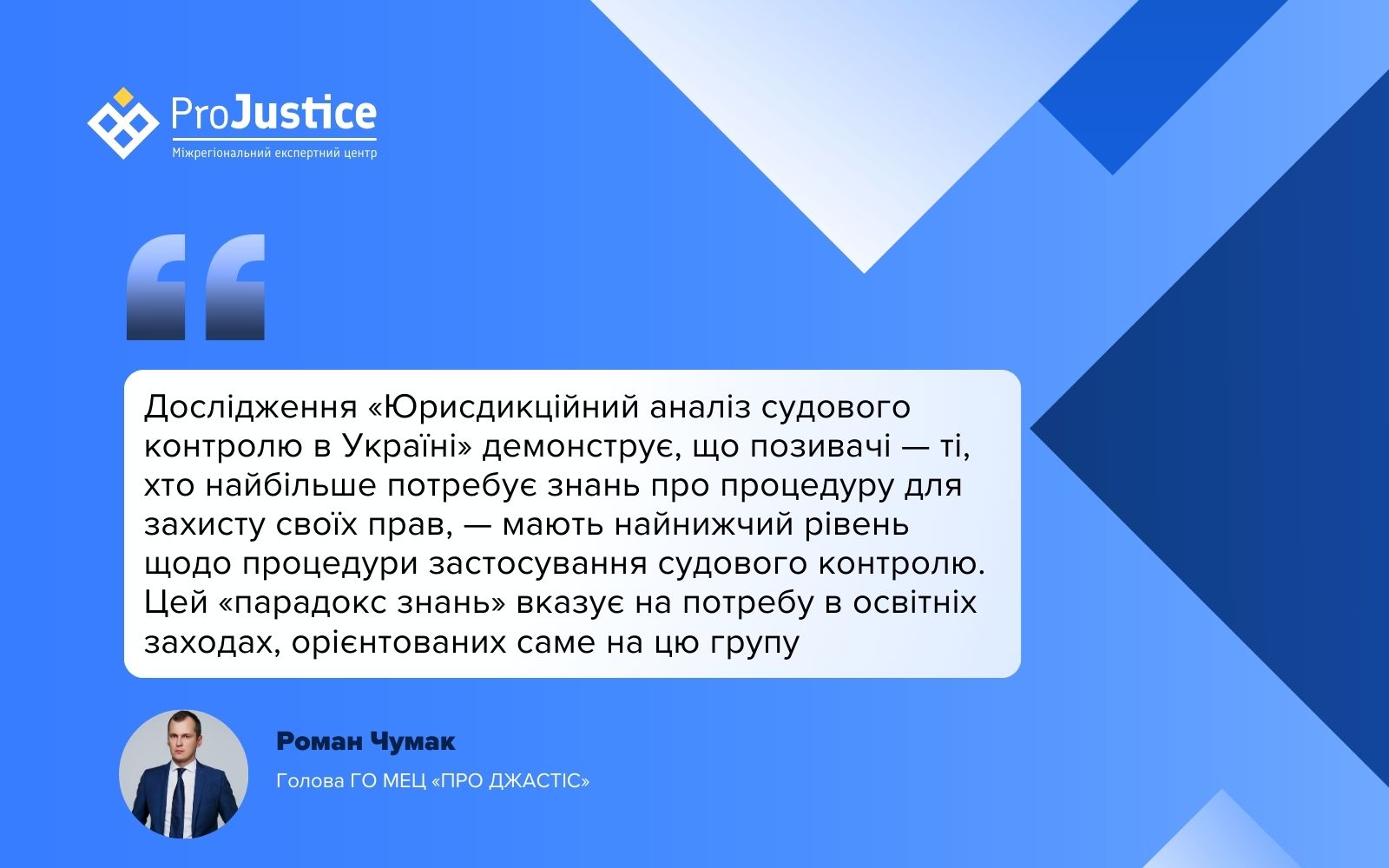
He also discussed the main reasons for the non-enforcement of court decisions and provided an overall assessment of the effectiveness of the judicial review procedure.
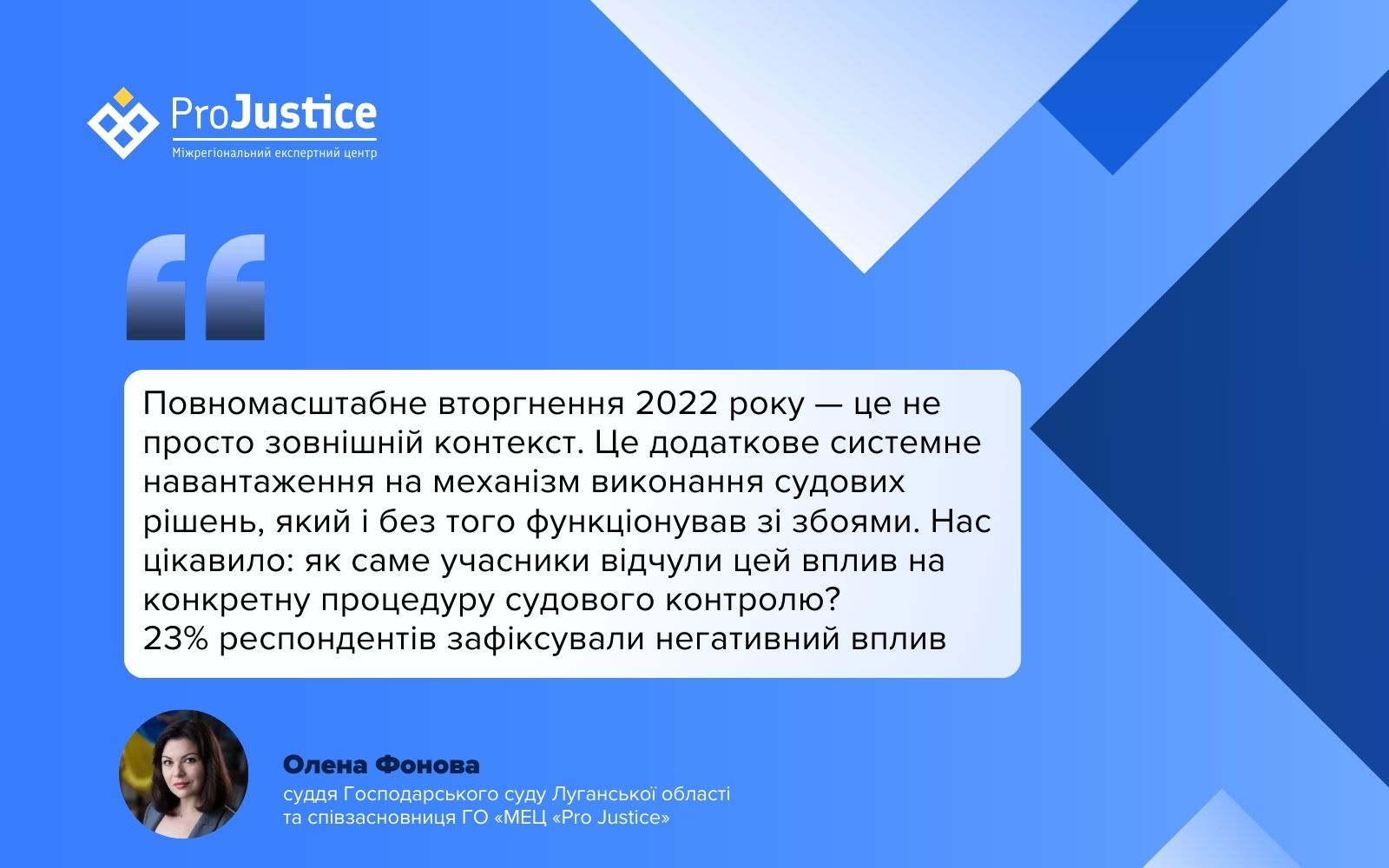
Olena Fonova, Deputy Chair of the NGO “PRO Justice,” presented the results of an analysis of the impact of full-scale war on the application of judicial review procedures in administrative proceedings. In particular, she outlined the challenges faced by the system for enforcing court decisions, as well as the adaptive mechanisms that have emerged under wartime conditions.
The study aimed to establish an analytical foundation for further improving legislation and institutional mechanisms of judicial review in Ukraine. Its findings show that judicial review remains a key element in safeguarding rights and freedoms; however, its practical effectiveness varies across administrative, civil, commercial, and criminal proceedings.
We sincerely thank the Supreme Court for the opportunity to present the study’s findings within its walls and for its openness to professional discussion on improving the enforcement of court decisions.
Special thanks to the EU “Pravo-Justice” Project for supporting this initiative, as well as to all speakers and participants for a substantive discussion on mechanisms that facilitate the effective enforcement of court decisions and strengthen trust in the justice system.